Bedroom Furniture and Decor Names with Pictures (80+ Items)
You know the thing you want. You do not know what it is called, so you cannot search for it. This list names every piece in a bedroom and explains what each one actually does.
Casavista Dremiai — AI Room Design
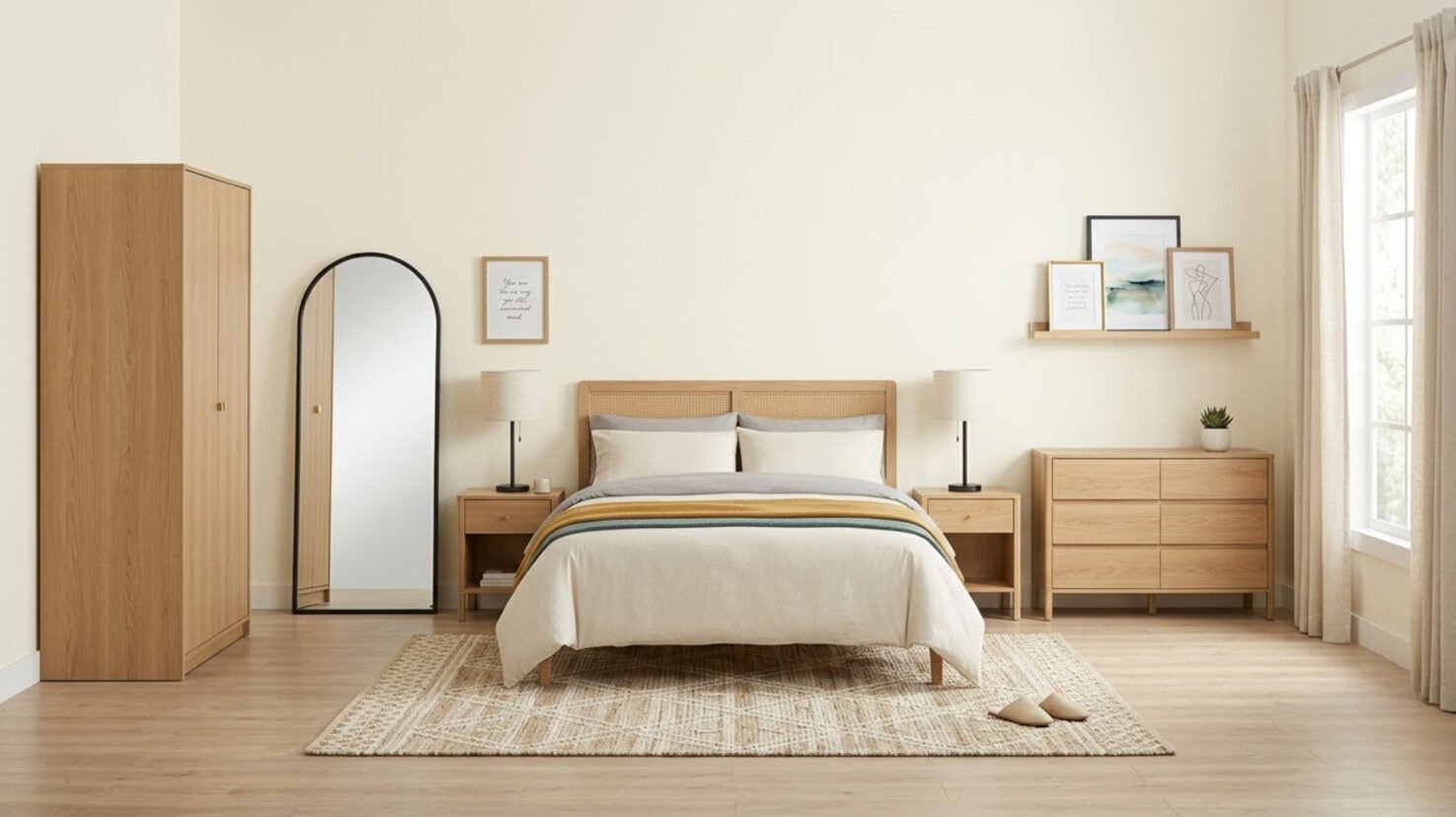
🛋️ Why the right name matters
Searching for “the small table next to a bed” returns nothing useful. Searching for “nightstand” returns exactly what you wanted, at every price. Furniture shopping is mostly a vocabulary problem, and it gets worse when the same object has two names in two countries.
This list covers more than eighty pieces grouped by where they live in the room: beds, storage, seating and desks, lighting, bedding, window treatments, wall decor, and the small items that make a room work. Each entry gives the name, an alternative name where one exists, and what the piece is for in one line.
🛏️ Beds and bed parts (16 names)
- Bed frame — the structure that holds the mattress off the floor.
- Headboard — the upright panel at the head of the bed. Stops pillows falling and protects the wall.
- Footboard — the matching panel at the foot. Looks traditional; makes the bed feel shorter.
- Slats — the wooden bars across the frame that support the mattress instead of a base.
- Box spring (divan base) — a solid sprung base under the mattress that adds height and support.
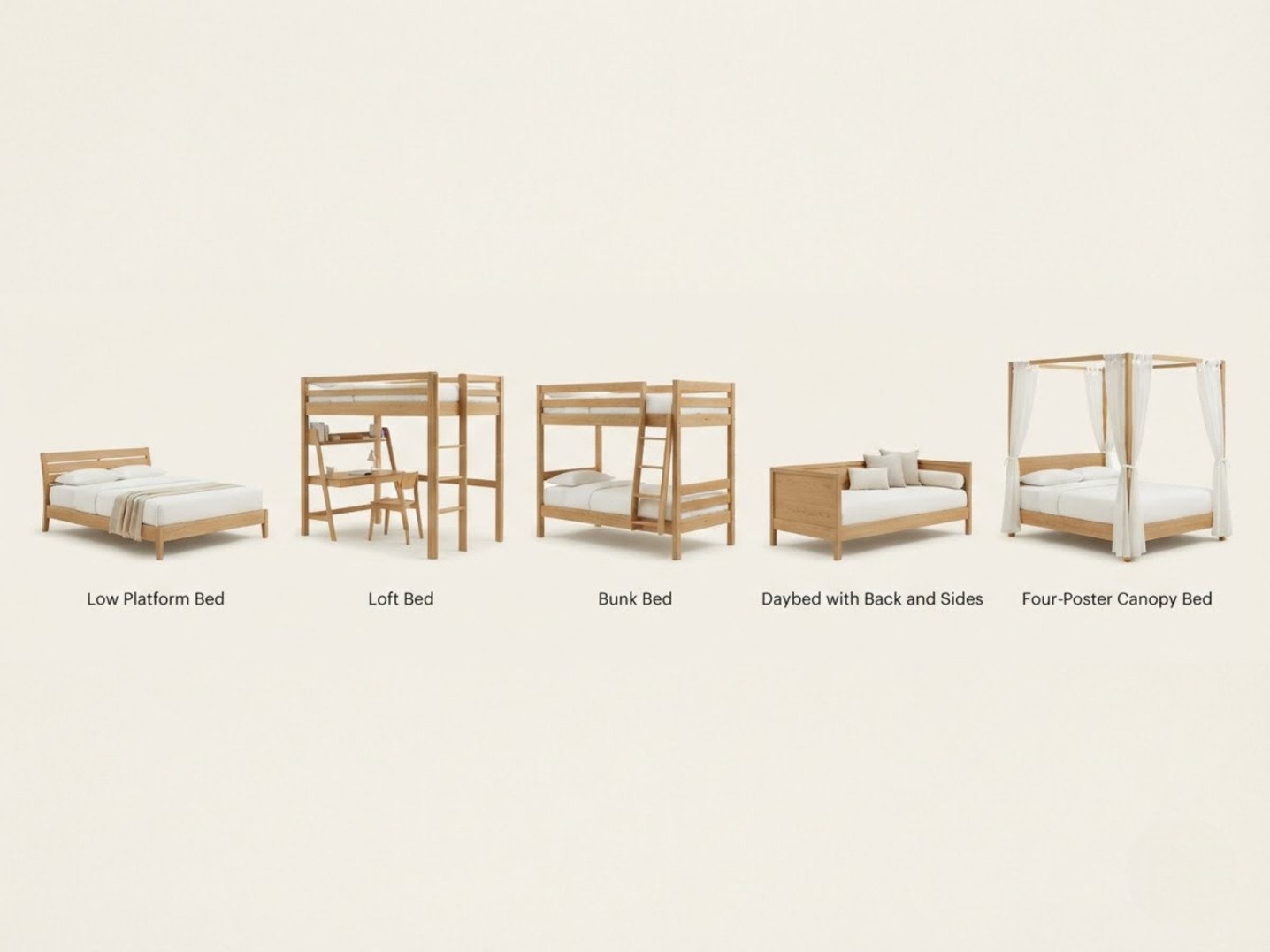
- Platform bed — a low frame with a built-in solid or slatted base, so no box spring is needed.
- Storage bed (ottoman bed) — a bed whose base lifts or opens into deep drawers underneath.
- Loft bed (high sleeper) — a raised bed with usable space beneath for a desk or wardrobe.
- Bunk bed — two beds stacked vertically in one footprint.
- Trundle bed — a low second bed that rolls out from under the main one.
- Daybed — a single bed with a back and sides, used as a sofa during the day.
- Canopy bed (four-poster) — a frame with four posts and a rail overhead for fabric.
- Murphy bed (wall bed) — a bed that folds up vertically into a cabinet.
- Futon — a folding mattress that converts between a seat and a bed.
- Bed rail — a low guard along the side, used for toddlers or top bunks.
- Bed bench (end-of-bed bench) — a long seat across the foot of the bed for sitting or laying out clothes.
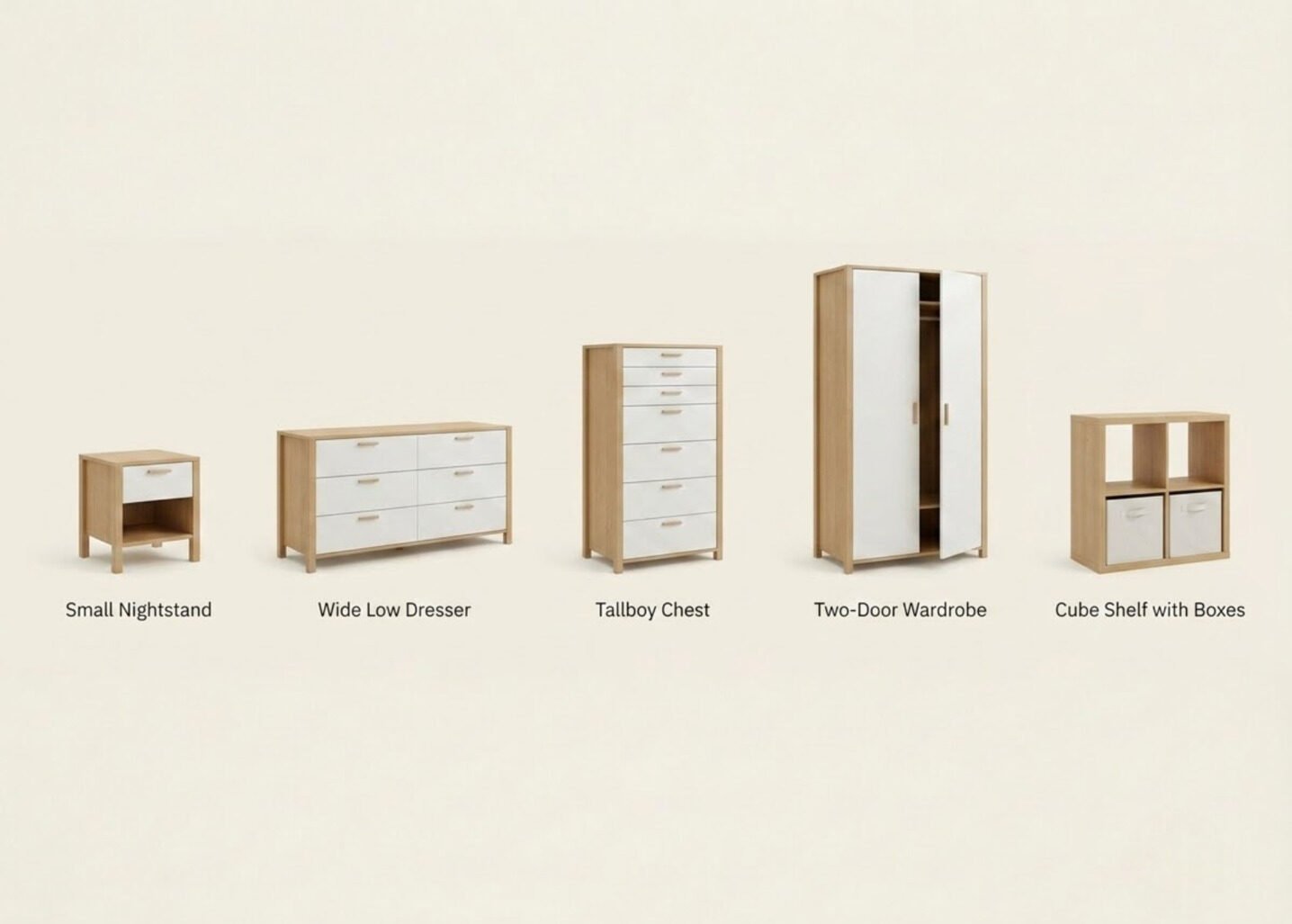
- Nightstand (bedside table, night table) — the small table beside the bed for a lamp, phone and water.
- Floating nightstand — a wall-mounted version with no legs, used where floor space is tight.
- Dresser (chest of drawers) — a wide, low unit of drawers for folded clothes.
- Tallboy (highboy) — a narrow, tall chest of drawers. Same storage as a dresser in half the width.
- Wardrobe (armoire, closet) — a tall cupboard with a hanging rail for clothes.
- Built-in wardrobe (fitted wardrobe) — storage built into the wall, floor to ceiling.
- Clothes rail (garment rack) — an open hanging rail, used when there is no wardrobe.
- Blanket chest (hope chest, toy box) — a lidded box at the foot of the bed for bedding or toys.
- Storage ottoman — a padded seat that opens for storage.
- Under-bed drawers — shallow rolling boxes that use the dead space beneath the bed.
- Cube shelf (cubby unit) — a grid of open squares that takes fabric boxes.
- Bookcase — open shelving for books, usually taller than it is wide.
- Floating shelf — a wall shelf with hidden brackets, so it appears to have no support.
- Étagère — a light open shelving unit, often with a metal frame and no back.
- Closet organiser — internal shelves, rails and drawers that divide a wardrobe interior.
🗄️ Storage furniture (15 names)
💺 Seating and desks (10 names)
- Desk — a work surface at sitting height, usually 72–76 cm tall.
- Writing desk — a slim desk with no drawer stack, made for a laptop and little else.
- Corner desk (L-shaped desk) — a desk that turns a corner, giving two work zones.
- Vanity (dressing table) — a table with a mirror, used for make-up and getting ready.
- Vanity stool — a low backless seat that tucks fully under the vanity.
- Desk chair (task chair) — an adjustable chair with back support for long sitting.
- Accent chair — a single decorative armchair, usually in a corner.
- Papasan chair — a round bowl-shaped cushion chair on a bowl frame.
- Bean bag — a soft filled seat with no frame, popular in teen and gaming rooms.
- Window seat — built-in bench seating under a window, often with storage below.
💡 Lighting (13 names)
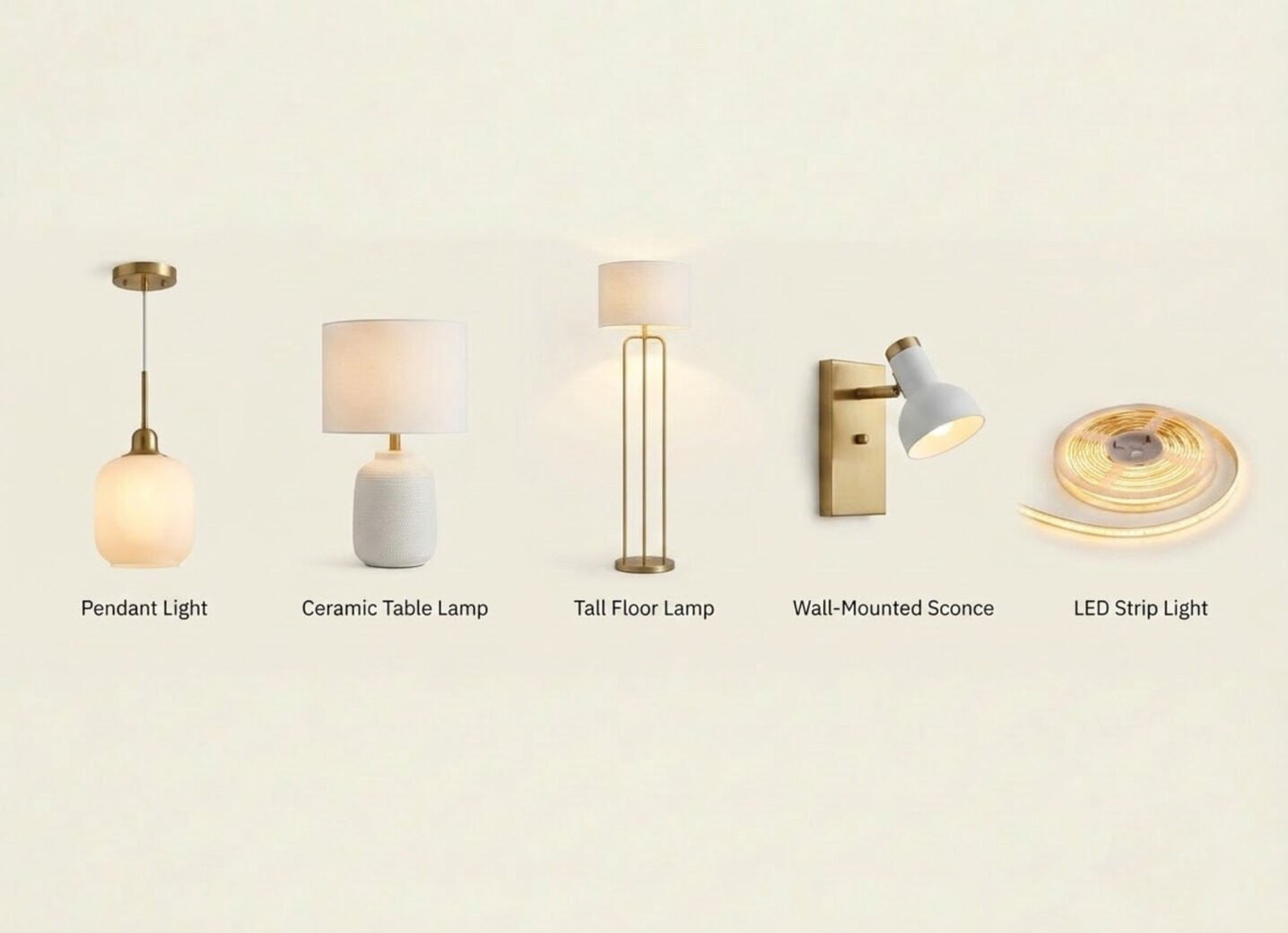
The single most effective change in most bedrooms: replace one bright ceiling light with three small warm ones at different heights. Layered light is what makes a room look like the photographs.
- Flush mount — a ceiling light sitting flat against the ceiling. Standard in low rooms.
- Pendant light — a light hanging from a cord or rod.
- Chandelier — a branched decorative hanging light with several bulbs.
- Table lamp — a portable lamp for a nightstand or desk.
- Floor lamp — a tall standing lamp, used to light a corner.
- Arc lamp — a floor lamp with a long curved arm that reaches over furniture.
- Wall sconce — a light fixed to the wall. Beside a bed it frees the whole nightstand.
- Picture light — a small directional light mounted above artwork.
- LED strip (light strip) — a flexible adhesive light line, used behind headboards, shelves and desks.
- Fairy lights (string lights) — a long string of small bulbs, the cheapest way to add warmth.
- Neon sign — a shaped LED sign used as a light and wall decoration in one.
- Night light — a very low-output plug-in light for children’s rooms and hallways.
- Smart bulb — a bulb whose brightness and colour temperature can be changed from a phone.
🛌 Bedding and textiles (16 names)
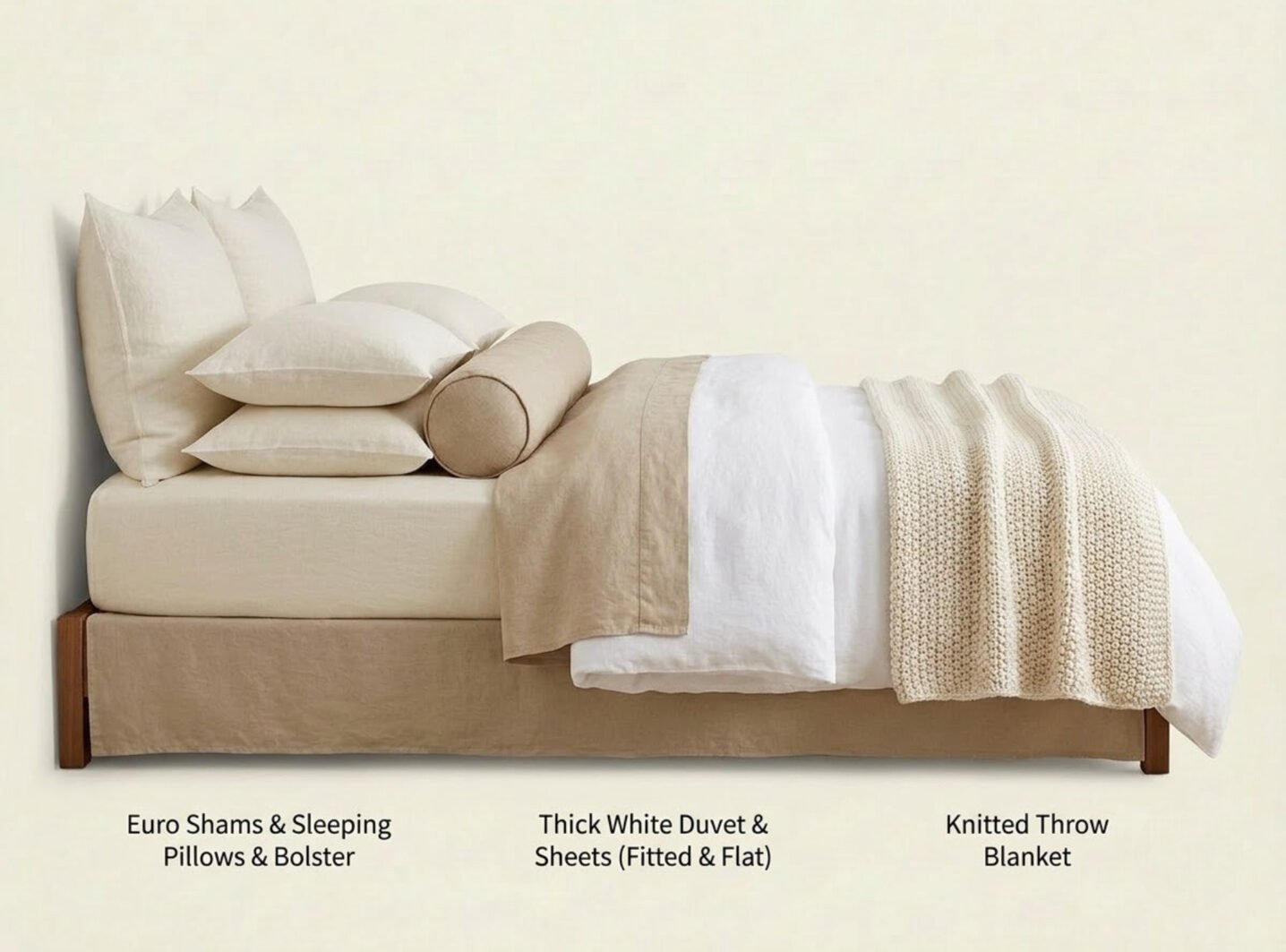
- Mattress — the sleeping surface itself.
- Mattress topper — a removable padded layer that softens or firms an existing mattress.
- Mattress protector — a thin waterproof or washable cover directly on the mattress.
- Fitted sheet — the elasticated sheet that stretches over the mattress.
- Flat sheet (top sheet) — the loose sheet between you and the duvet.
- Duvet (comforter insert) — the filled quilt that provides the warmth.
- Duvet cover — the washable fabric case the duvet slides into.
- Comforter — a single filled, patterned bedcover used without a separate cover. The US alternative to a duvet.
- Quilt — a thin stitched bedcover in three layers, used alone in summer or as a layer.
- Coverlet (bedspread) — a light decorative cover laid over the made bed.
- Pillowcase — the everyday cover for a sleeping pillow.
- Pillow sham — a decorative pillow cover, usually with a border, not slept on.
- Euro sham — a large square pillow cover (typically 65 cm) used as a back layer.
- Bolster — a long cylindrical cushion laid across the bed.
- Throw blanket — a small decorative blanket folded at the foot of the bed.
- Bed skirt (valance sheet) — fabric that hides the base and anything stored under the bed.
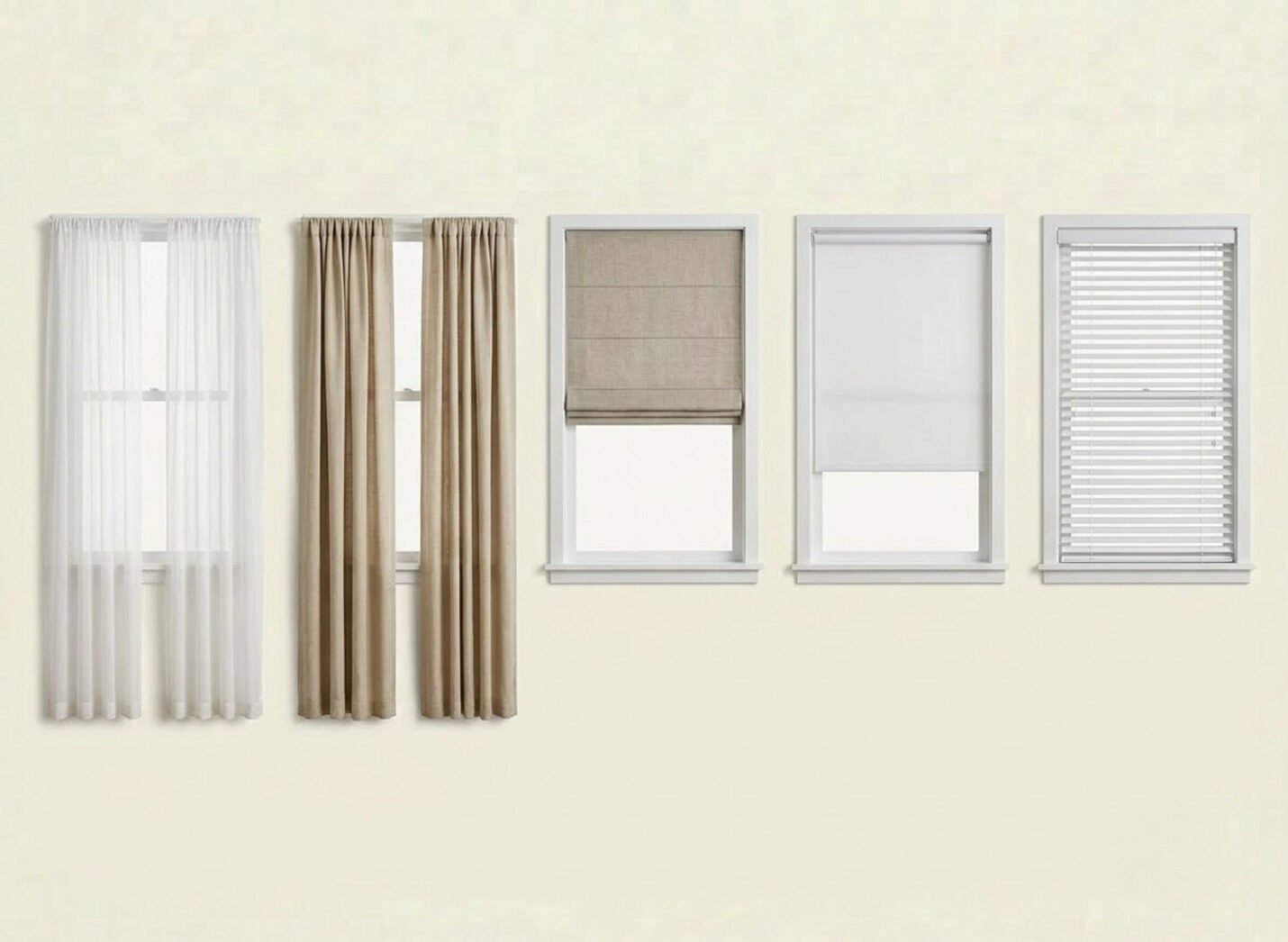
- Curtains (drapes) — fabric panels that draw across the window.
- Sheer curtains (voile, net) — thin translucent panels that soften light and keep privacy.
- Blackout curtains — lined panels that block almost all light. Essential for shift workers and small children.
- Curtain rod (curtain pole) — the bar the curtains hang from. Mount it wide and high to make a window look bigger.
- Valance (pelmet) — a short fabric or board across the top of a window that hides the fittings.
- Roman shade (roman blind) — a fabric blind that folds into flat horizontal pleats as it rises.
- Roller blind (roller shade) — a single sheet that rolls onto a tube. The cheapest full-window option.
- Venetian blind — horizontal slats that tilt to control light direction.
- Area rug — a large loose rug that defines a zone. Under a bed it should extend about 60 cm past each side.
- Runner rug — a long narrow rug, used beside a bed or along a galley layout.
- Rug pad — a grip layer under a rug that stops it sliding and slows wear.
- Shag rug — a deep-pile rug with long fibres, used for warmth and texture.
🪟 Window treatments and floor (12 names)
🖼️ Wall and mirror decor (12 names)
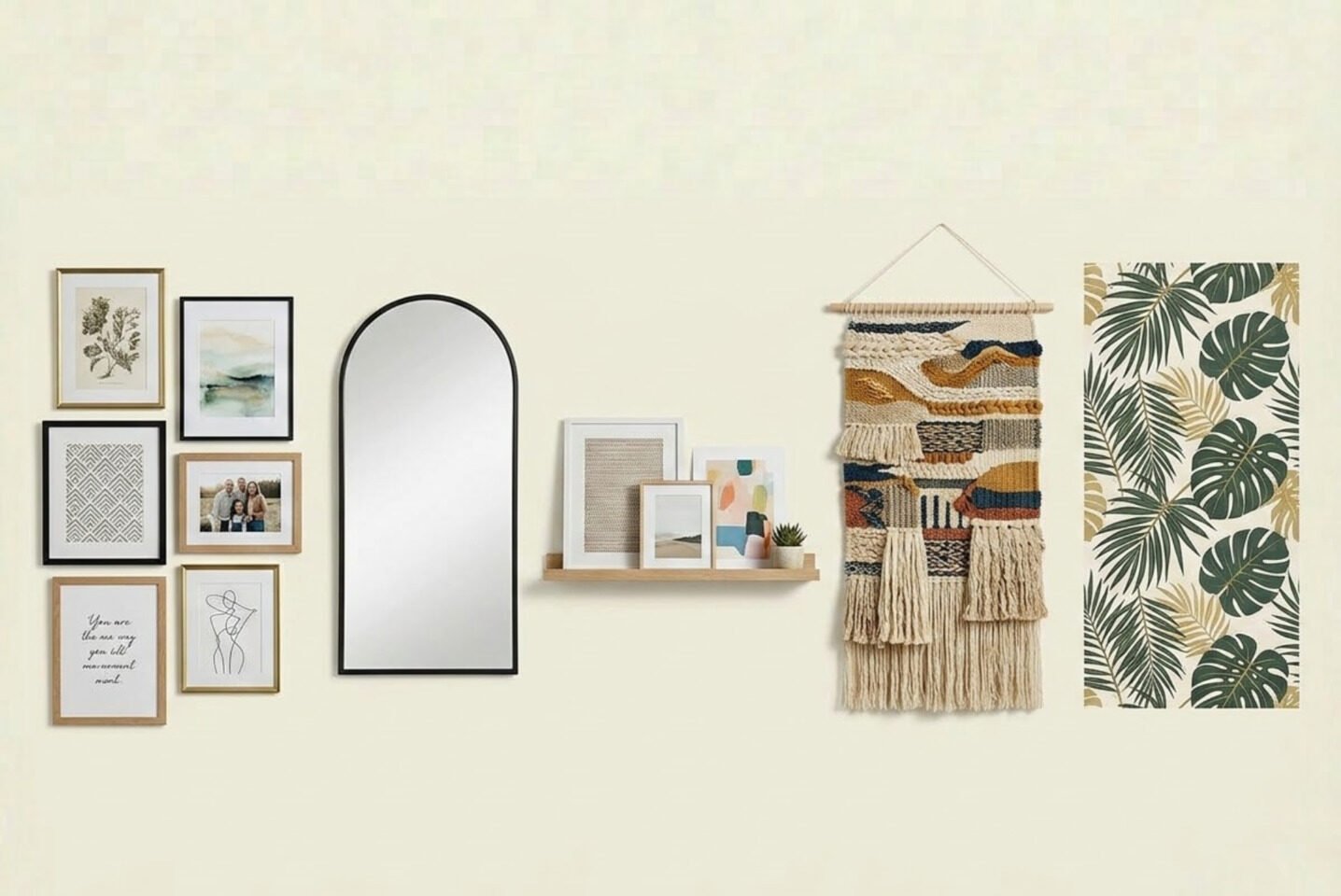
- Gallery wall — a planned group of frames hung together as one composition.
- Picture ledge (floating ledge) — a narrow shelf with a lip, so frames can lean and be swapped without nails.
- Tapestry — a large fabric wall hanging. Covers more wall than art for less money.
- Full-length mirror — a floor-standing or wall mirror tall enough to show a whole outfit.
- Arch mirror — a mirror with a rounded top, the current standard shape in soft and neutral rooms.
- LED vanity mirror — a mirror with built-in lights around the edge for make-up.
- Peel-and-stick wallpaper — removable self-adhesive wallpaper, the standard renter’s solution.
- Wall decal (wall sticker) — a shaped vinyl sticker applied directly to the wall.
- Wall panelling — timber or MDF strips fixed to the wall for texture. Includes shiplap and slat walls.
- Pinboard (corkboard, memo board) — a soft board for pinning photos and notes.
- Pegboard — a perforated board that takes movable hooks and small shelves.
- Bed canopy (mosquito net canopy) — fabric hung from the ceiling over the bed.
🧺 Small pieces that finish a room (12 names)
- Laundry hamper — a lidded basket for dirty clothes.
- Storage basket — an open woven or fabric basket for blankets, toys or shoes.
- Catch-all tray (valet tray) — a small tray by the door or bed for keys, rings and small things.
- Jewellery stand — a small rack or tree for hanging necklaces and earrings.
- Plant stand — a raised holder that lifts a plant off the floor.
- Hanging planter — a pot suspended from the ceiling or a bracket.
- Room divider (folding screen) — a freestanding panel that splits a room into zones.
- Over-door organiser — a hanging pocket rack that uses the back of the door.
- Shoe rack — a tiered stand or over-door holder for shoes.
- Charging station — a dock or tray that holds and charges devices in one place.
- Diffuser — a reed or electric device that scents the room continuously.
- Blackout blind liner — a light-blocking layer added behind existing curtains without replacing them.
🌍 Same thing, two names (UK vs US)
| UK / Europe | US |
|---|---|
| Bedside table | Nightstand |
| Wardrobe | Closet / armoire |
| Chest of drawers | Dresser |
| Curtains | Drapes |
| Roman blind | Roman shade |
| Valance sheet | Bed skirt |
| Pelmet | Valance |
| Divan base | Box spring |
| High sleeper | Loft bed |
| Duvet | Comforter |
📱 See the pieces in your own room before you buy
Knowing the name is step one; knowing whether an arch mirror or a tallboy suits your wall is step two. Casavista Dremiai redraws a photo of your real room with different furniture and styles, so you can compare before spending anything.
Related: 20 small bedroom layouts · 60+ room aesthetic names · 40 bedroom colour palettes with hex codes
Conclusion
A bedroom needs surprisingly few of these to work: somewhere to sleep, somewhere to put a lamp and a glass of water, closed storage for clothes, one good mirror, and three warm light sources instead of one bright one. Everything else on this list is optional. Learn the names of the pieces you actually need, and the shopping gets much faster.
❓ FAQ: bedroom furniture names
Q: What is the table beside a bed called?
A: A nightstand in the US, a bedside table or night table in the UK and most of Europe. A wall-mounted version with no legs is a floating nightstand.
Q: What is the difference between a dresser and a chest of drawers?
A: In practice they are the same furniture with different regional names. Where both terms are used, a dresser is wide and low with a mirror above, and a chest of drawers is narrower and taller.
Q: What is the difference between a duvet and a comforter?
A: A duvet is a plain filled insert that goes inside a washable duvet cover. A comforter is a single finished piece, already patterned, used without a cover. Duvets are easier to wash; comforters are quicker to make.
Q: What is a pillow sham?
A: A decorative pillow cover, usually with a flat border or a closure at the back, used on display pillows rather than the ones you sleep on. A euro sham is the large square version.
Q: What furniture does a bedroom actually need?
A: A bed, one nightstand per sleeper, closed clothes storage, a mirror and layered lighting. A desk, chair and rug are useful additions. Everything else is decoration rather than function.
Q: What size rug goes under a bed?
A: One that extends roughly 60 cm (24 in) beyond each side and the foot of the bed, so you step onto rug and not floor. If that is too large, use two runner rugs down the sides instead.
Q: What is the best storage furniture for a small bedroom?
A: A storage bed or platform bed with drawers, because it uses space you already lost to the bed. After that, a tallboy rather than a dresser — the same capacity in half the wall width.
Q: What is the difference between a loft bed and a bunk bed?
A: A bunk bed has two mattresses stacked. A loft bed has one raised mattress with open, usable space underneath for a desk, wardrobe or seating.
🧑💻 About the Author
Casavista Dremiai — AI room design
Written by the team behind Casavista Dremiai, an independent app that redesigns a photo of your real room. This glossary comes from the furniture and decor our users ask to add to their rooms most often. Casavista Dremiai runs on iPhone and Android, is free to try, and needs no account.
Questions: support@casavista.site