60+ Room Aesthetic Names with Pictures (A–Z List)
You saw a room you loved and you have no idea what it is called. This is the list that names it — every major room aesthetic, what it actually means, and the colours and pieces that make it work.
Casavista Dremiai — AI Room Design
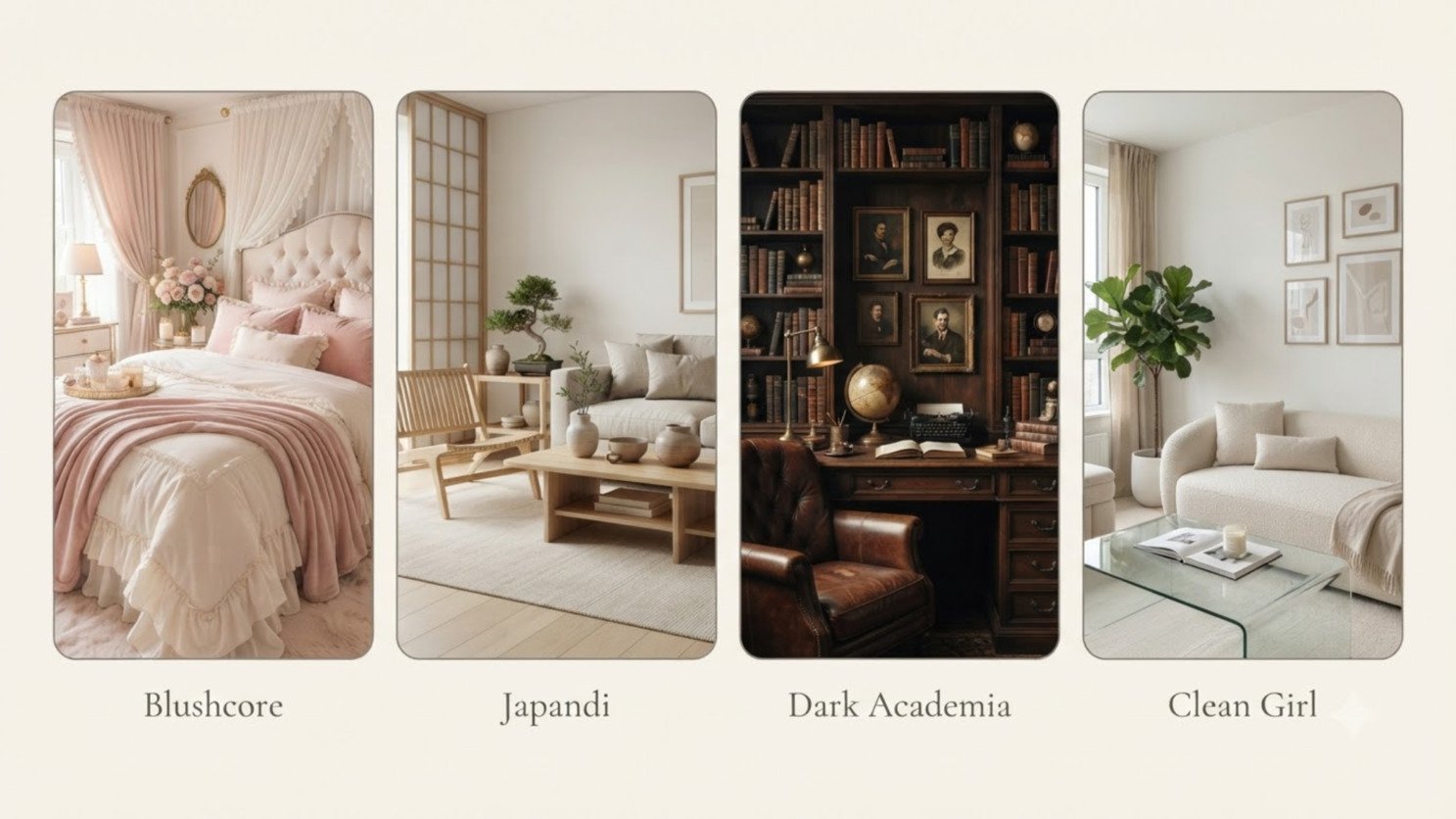
🌟 What is a room aesthetic?
A room aesthetic is a named visual style — a recognisable combination of colour palette, materials, furniture shapes and mood that people agree to call by one word. “Blushcore” and “Dark Academia” are aesthetics; “pink” and “brown” are just colours.
The difference matters when you are decorating. Choosing “I want pink” gives you nothing to shop for. Choosing “I want Blushcore” tells you the exact pinks, the fabric, the lighting temperature and which pieces to leave out. A name is a decision that has already been made for you sixty times over.
Below are 60+ aesthetics in alphabetical order. Each entry gives a plain definition, the colours that define it, the key pieces that signal it, and who it suits best. Skim it, note the two or three names that keep pulling you back, and you have your direction.
🧭 How to use this list
- Pick two, not one. Almost every real room is one main aesthetic plus a light second one. Japandi with a Cottagecore softness. Clean Girl with a Coastal edge.
- Match the aesthetic to your light. North-facing and dark? Light Academia, Scandinavian and Coastal will fight you. Dark Academia and Moody Luxe will thank you.
- Check the “best for” line. Some aesthetics need floor space (Maximalist, Bohemian). Some are built for small rooms (Minimalist, Japandi, Clean Girl).
- See it in your own room before you buy. A name that looks perfect on Pinterest can look wrong against your actual walls, window and floor.
🅰️ Room aesthetics A – C
1. Art Deco
Glamour built from geometry — fans, sunbursts, strong symmetry and polished metal, borrowed from the 1920s and 30s.
Colours: black, emerald, gold, cream · Key pieces: velvet headboard, brass lamp, mirrored surfaces · Best for: high ceilings and grown-up bedrooms
2. Balletcore
Rehearsal-room softness: pale pinks, ribbon, tulle and a hint of worn wood, more disciplined and less sugary than Coquette.
Colours: ballet pink, ivory, warm grey · Key pieces: ribbon-tied curtains, barre-style rail, satin cushions · Best for: teen bedrooms with good natural light
3. Barbiecore
Loud, confident, saturated pink used as the main colour rather than an accent — playful and deliberately unsubtle.
Colours: hot pink, fuchsia, white, chrome · Key pieces: pink feature wall, glossy furniture, statement mirror · Best for: anyone who wants a room that announces itself
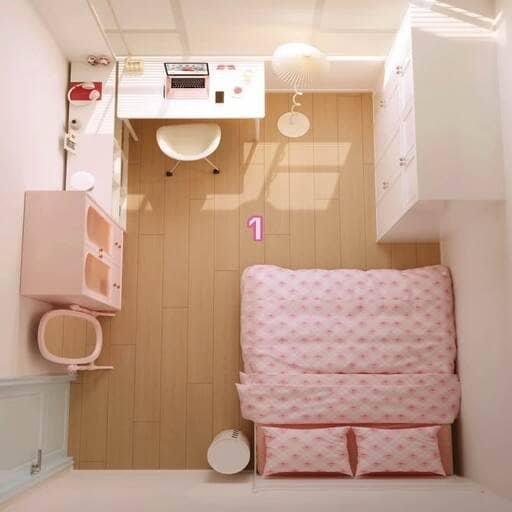
4. Blushcore
Soft blush pinks blended with warm neutrals and earth tones — the calm, grown-up version of a pink bedroom. Where Barbiecore shouts, Blushcore whispers, and that is why it reads as expensive rather than childish.
Colours: blush, oat, warm beige, soft clay · Key pieces: linen bedding, boucle chair, arched mirror, low warm lighting · Best for: teen and young-adult bedrooms, small rooms
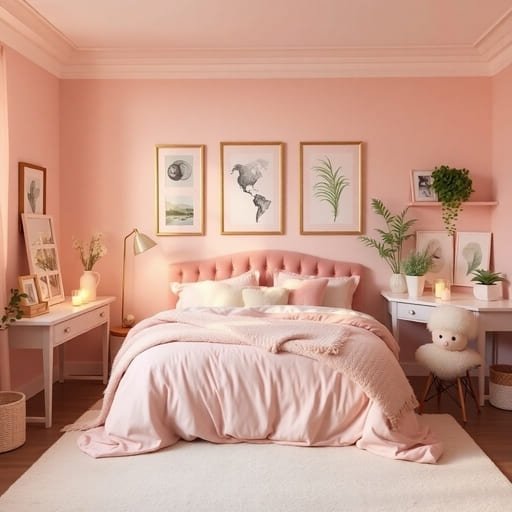
5. Bohemian (Boho)
Layered, collected and warm — rugs over rugs, plants everywhere, and furniture that looks gathered over years rather than bought in one weekend.
Colours: terracotta, rust, cream, olive · Key pieces: rattan, macramé, floor cushions, hanging plants · Best for: larger rooms with space to layer
6. Cabincore
Woodland shelter comfort: timber, wool, low light and the feeling that it is raining outside.
Colours: pine, forest green, charcoal, cream · Key pieces: plaid throw, timber panelling, lantern lighting · Best for: rooms with wood floors or exposed beams
7. Clean Girl
Minimalism with warmth — neutral tones, clear surfaces, one good mirror and everything in its place. The defining rule is subtraction: it is not what you add, it is what you refuse to put on the dresser.
Colours: cream, beige, white, light oak · Key pieces: LED vanity mirror, glass jars, ribbed textures, slim gold hardware · Best for: small rooms, anyone who tidies daily
8. Cluttercore
The deliberate opposite of minimalism — every surface holds something meaningful, and the mess is the point.
Colours: anything, all at once · Key pieces: full shelves, printed photos, collections on display · Best for: people who feel cold in empty rooms
9. Coastal
Light, airy and sea-adjacent without the literal seashells — pale woods, white cotton and a lot of daylight.
Colours: white, sand, soft blue, driftwood grey · Key pieces: linen curtains, woven baskets, light timber · Best for: bright rooms with big windows
10. Coastal Grandma
Coastal with a cardigan on — softer, older, more comfortable, with slipcovers, real books and a made bed.
Colours: ivory, seafoam, navy, natural linen · Key pieces: slipcovered chair, ceramic lamp, hydrangeas · Best for: calm, unhurried bedrooms
11. Coquette
Bows, lace, pearls and ruffles — hyper-feminine and slightly theatrical, built around repetition of one motif.
Colours: cream, pink, red ribbon accents · Key pieces: bow wall art, lace runner, ruffled bedding, vintage perfume tray · Best for: teen bedrooms and vanity corners
12. Cottagecore
Rural nostalgia — florals, dried flowers, quilts and painted wood, as if the room belongs to a cottage that has been loved for a century.
Colours: cream, sage, butter yellow, faded rose · Key pieces: floral bedding, wicker basket, gingham, open shelving · Best for: rooms with character, sloped ceilings or old windows
13. Cyberpunk
Neon-lit and night-coded — dark surfaces cut through with magenta and cyan light, screens, and a city-at-3am feeling.
Colours: black, magenta, cyan, electric purple · Key pieces: LED strips, neon sign, dark panelling, tech on display · Best for: gaming rooms and windowless spaces
🅳 Room aesthetics D – G
14. Danish Pastel
Scandinavian simplicity in sweet-shop colours — clean shapes, playful pastels, wavy mirrors and checkerboard prints.
Colours: lilac, mint, butter, baby blue · Key pieces: wavy mirror, checkerboard rug, squiggle candles · Best for: young bedrooms and study corners
15. Dark Academia
Old-library moodiness — deep browns and greens, stacked books, brass lamps and heavy fabric. The trick is warmth: without a warm light source, Dark Academia turns gloomy instead of scholarly.
Colours: chocolate, forest green, burgundy, antique gold · Key pieces: bookshelves, desk lamp, framed prints, velvet, globe · Best for: darker rooms and study bedrooms
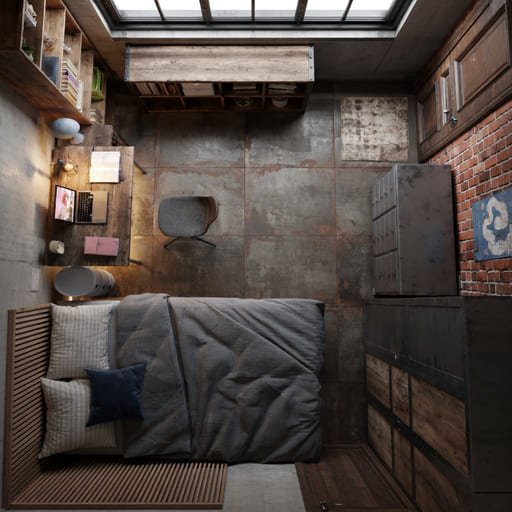
16. Dopamine Decor
Colour chosen purely because it makes you happy, with no rules about matching — the anti-beige movement.
Colours: bright, clashing, joyful · Key pieces: colour-blocked bedding, art prints, painted furniture · Best for: rented rooms that need life without renovation
17. Eclectic
Deliberate mixing of periods and styles held together by one repeated colour or material.
Colours: varied, with one anchor tone · Key pieces: antique next to modern, gallery wall, mixed woods · Best for: people who already own things they love
18. Fairycore
Woodland-fantasy softness — climbing greenery, fairy lights, sheer canopies and a slightly enchanted glow.
Colours: moss green, cream, lavender, pale gold · Key pieces: bed canopy, string lights, pressed flowers, vines · Best for: children’s and teen bedrooms
19. Farmhouse
Practical rural comfort — shiplap, matte black hardware, white walls and sturdy wood.
Colours: white, warm grey, black, natural oak · Key pieces: barn door, shaker furniture, woven textures · Best for: family bedrooms and larger spaces
20. Frutiger Aero
Early-2000s tech optimism — glossy surfaces, water and sky imagery, bright greens and blues, bubbles and lens flare.
Colours: sky blue, glass green, white, silver · Key pieces: glossy desk, nature wallpaper, aqua lighting · Best for: desk setups and gaming corners
21. Gamercore
Built around the setup — RGB lighting, dark walls that stop screen glare, and cable management treated as decor.
Colours: black, charcoal, RGB accents · Key pieces: LED strips, monitor arm, acoustic panels, shelf for figures · Best for: gaming rooms and shared teen bedrooms
22. Ghibli
Hand-painted warmth from animation — soft greens, cluttered-but-cosy shelves, plants and light through a window.
Colours: meadow green, sky blue, warm wood, cream · Key pieces: plants, open window, wooden desk, small treasures · Best for: cosy rooms with a good view
23. Goblincore
Earthy and collected from the forest floor — mushrooms, moss, stones, dark wood and things other people would throw away.
Colours: moss, mushroom brown, deep green · Key pieces: jars of finds, dried plants, mismatched wood · Best for: small, dim, personal rooms
24. Grandmillennial
Your grandmother’s taste, worn confidently — chintz, scalloped edges, skirted tables and pattern on pattern.
Colours: rose, powder blue, cream, green · Key pieces: floral wallpaper, ruffled lampshade, needlepoint cushions · Best for: classic rooms with mouldings
25. Grunge / Indie
Posters edge to edge, band merch, warm low lamps and a deliberately unpolished finish.
Colours: charcoal, red, faded denim, black · Key pieces: poster wall, record player, floor lamp, fairy lights · Best for: teen bedrooms on a small budget
🅷 Room aesthetics H – M
26. Hello Kitty / Sanrio
Character-led cuteness built around one mascot palette, repeated in bedding, storage and wall art.
Colours: white, red, pink, pastel accents · Key pieces: character bedding, plush shelf, themed lamp · Best for: children’s rooms and collectors
27. Hollywood Regency
Old-film glamour — high contrast, lacquer, mirrored furniture and unapologetic drama.
Colours: black, white, gold, jewel accents · Key pieces: tufted headboard, mirrored nightstand, chandelier · Best for: bedrooms with tall ceilings
28. Industrial
Warehouse materials brought indoors — exposed brick, black metal, concrete tones and visible structure.
Colours: concrete grey, black, rust, tan leather · Key pieces: metal bed frame, Edison bulbs, pipe shelving · Best for: lofts, apartments, older buildings
29. Japandi
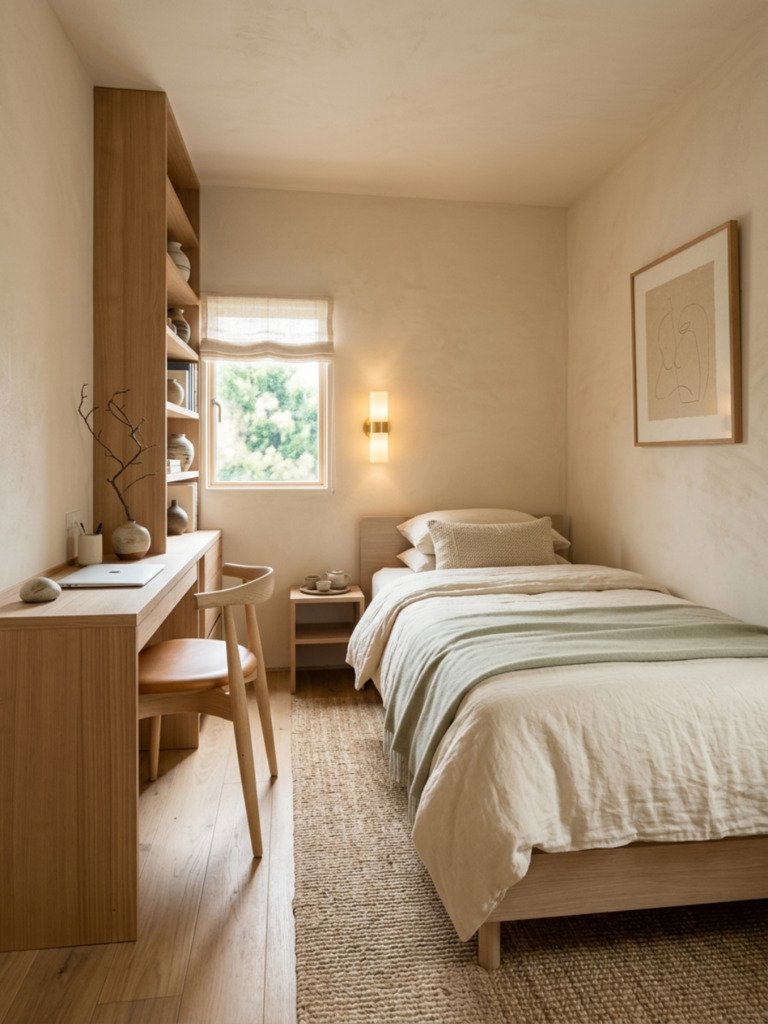
Japanese restraint crossed with Scandinavian warmth — low furniture, natural materials, almost nothing on display, and a very calm colour range. It is the most forgiving aesthetic for a small room because emptiness is the feature.
Colours: oat, warm white, pale oak, charcoal, sage · Key pieces: low bed, linen, paper lamp, one plant, closed storage · Best for: small bedrooms, calm sleepers, minimalists
30. Kidcore
Nineties childhood nostalgia in primary colours — rainbows, stickers, plastic and cartoon energy.
Colours: primary red, blue, yellow, green · Key pieces: rainbow rug, sticker wall, novelty lamp · Best for: children’s rooms and playful teen spaces
31. K-Pop
Idol-fan display culture — photocard walls, neon accent lighting, glossy pastels and a dedicated merch shelf.
Colours: lilac, white, neon pink, silver · Key pieces: photocard display, LED sign, album shelf, mirror lights · Best for: teen bedrooms and small feature walls
32. Light Academia
The daylight version of Dark Academia — cream walls, warm woods, books and linen, studious but bright.
Colours: ivory, camel, soft brown, sage · Key pieces: writing desk, open books, botanical prints, brass · Best for: bright rooms and study bedrooms
33. Maximalist
More of everything, arranged with intent — bold pattern, saturated colour and full walls, held together by strong repetition.
Colours: jewel tones, layered patterns · Key pieces: patterned wallpaper, gallery wall, velvet, statement rug · Best for: big rooms and confident decorators
34. Mediterranean
Sun-bleached and hand-made — plaster walls, arches, terracotta and blue-and-white ceramics.
Colours: whitewash, terracotta, olive, sea blue · Key pieces: arched mirror, plaster finish, ceramic lamp, rattan · Best for: bright rooms with warm floors
35. Mid-Century Modern
1950s–60s design language — tapered legs, walnut, clean curves and functional shapes that have aged well.
Colours: walnut, mustard, teal, cream · Key pieces: tapered-leg dresser, globe lamp, geometric art · Best for: rooms needing timeless furniture
36. Minimalist
Reduction as the whole design — few objects, no visible clutter, and quality judged by what is absent.
Colours: white, grey, black, one wood tone · Key pieces: platform bed, closed storage, single artwork · Best for: small rooms and low-stimulation sleepers
37. Mob Wife
Loud luxury — animal print, faux fur, gold, dark wood and a deliberate excess that rejects quiet taste.
Colours: black, gold, leopard, deep red · Key pieces: faux fur throw, gilt mirror, heavy drapes · Best for: statement bedrooms
38. Modern
Clean lines, uncluttered surfaces and a neutral base with one or two strong contemporary accents.
Colours: white, grey, black, accent tone · Key pieces: low-profile bed, integrated lighting, flat-front storage · Best for: new-build rooms and rentals
🅽 Room aesthetics N – S
39. Neoclassical
Formal proportion and quiet grandeur — panelled walls, symmetry, columns and restrained ornament.
Colours: ivory, stone, soft grey, gold · Key pieces: wall panelling, upholstered headboard, matching lamps · Best for: larger, well-proportioned rooms
40. Newtro
Korean “new retro” — vintage forms rebuilt in fresh colours, with retro tech treated as decoration.
Colours: cream, cherry red, retro brown, mint · Key pieces: retro radio, tube TV, curved furniture, checkered tile · Best for: creative corners and small apartments
41. Old Money / Quiet Luxury
Expensive materials with no logos — heavy fabrics, tailored bedding, dark wood and an absence of anything trendy.
Colours: cream, navy, camel, deep green · Key pieces: tailored headboard, hardback books, brass lamp, wool rug · Best for: adult bedrooms aiming for timeless
42. Organic Modern
Modern shapes softened by natural texture — curves, raw woods, stone and plenty of undyed fabric.
Colours: oat, clay, sand, off-white · Key pieces: curved furniture, jute rug, stone accents, boucle · Best for: calm, neutral bedrooms
43. Pastel / Softcore
Gentle low-saturation colour across the whole room, with no hard contrast anywhere.
Colours: baby pink, mint, lilac, cream · Key pieces: soft bedding, plush rug, rounded furniture · Best for: children’s and teen bedrooms
44. Preppy
Bright, tidy and school-coded — stripes, checks, monograms and cheerful clashing colour kept neat.
Colours: green, pink, navy, white · Key pieces: striped bedding, pinboard, letter art, neat shelving · Best for: teen bedrooms and dorms
45. Retro 70s
Earthy seventies warmth — orange and brown, curved shapes, shag texture and wood panelling.
Colours: burnt orange, mustard, chocolate, avocado · Key pieces: shag rug, arched lamp, wood panel wall, corduroy · Best for: rooms that can take strong colour
46. Rustic
Rough, honest materials — unfinished timber, stone, iron and textiles that look hand-made.
Colours: brown, stone grey, cream, forest · Key pieces: reclaimed wood bed, wool blanket, iron hardware · Best for: country homes and attic rooms
47. Santorini
Greek-island brightness — chalk-white plaster, blue accents, curved walls and strong sunlight.
Colours: white, aegean blue, sand · Key pieces: plaster walls, arched niches, blue textiles, rattan · Best for: very bright rooms
48. Scandinavian
Northern light design — white walls, pale wood, functional furniture and cosy layered textiles.
Colours: white, pale grey, birch, soft blue · Key pieces: light wood bed, wool throw, simple pendant, plants · Best for: small and low-light rooms
49. Shabby Chic
Painted, distressed and softly feminine — chipped white furniture, florals and vintage lace.
Colours: white, pale pink, duck egg, cream · Key pieces: distressed dresser, floral quilt, glass knobs · Best for: cottage-style bedrooms
50. Skater
Street-culture display — decks mounted on walls, stickers, concrete tones and hard-wearing surfaces.
Colours: concrete grey, black, bold graphic accents · Key pieces: deck wall mount, sticker collage, industrial shelf · Best for: teen bedrooms
51. Soft Beige
A whole room in one warm tonal family, where interest comes from texture rather than colour.
Colours: beige, oat, sand, taupe · Key pieces: textured bedding, boucle, layered neutrals · Best for: restful and rented rooms
52. Soft Tech
Technology made gentle — rounded devices, warm ambient lighting and neutral fabrics instead of black plastic.
Colours: off-white, pale grey, soft sage, chrome · Key pieces: ambient light bar, cable-free desk, curved shelving · Best for: desk setups and creator corners
53. Sports
Team identity as a colour scheme — jersey display, court or pitch references and gear kept visible.
Colours: team colours on a neutral base · Key pieces: framed jersey, ball storage, banner, scoreboard clock · Best for: children’s and teen bedrooms
54. Steampunk
Victorian machinery fantasy — brass, gears, leather, maps and warm amber light.
Colours: brass, oxblood, walnut, black · Key pieces: gear wall art, leather chair, exposed pipes, globe · Best for: themed rooms and studies
🆃 Room aesthetics T – Z
55. Tropical
Resort greenery indoors — big leaf prints, rattan, warm wood and bright white walls.
Colours: palm green, white, teak, coral · Key pieces: leaf wallpaper, rattan headboard, ceiling fan, plants · Best for: warm climates and bright rooms
56. Vanilla Girl / Vanilla Glow
Everything in cream and vanilla, layered thickly — the cosiest end of the neutral family.
Colours: vanilla, cream, ivory, pale wood · Key pieces: fluffy bedding, knit throw, candles, sheer curtains · Best for: soft, warm, low-contrast bedrooms
57. Vintage
Genuinely old pieces used as they are — patina, mismatched woods and furniture with a history.
Colours: aged wood, faded floral, cream, brass · Key pieces: antique dresser, old mirror, second-hand art · Best for: characterful rooms and small budgets
58. Wabi-Sabi
Beauty in imperfection and age — uneven plaster, handmade ceramics, muted tone and deliberate emptiness.
Colours: clay, ash, off-white, stone · Key pieces: textured walls, raw linen, hand-thrown pottery · Best for: calm, adult, minimal rooms
59. Whimsigoth
Nineties mystical darkness — stars and moons, velvet, deep jewel colours and a slightly witchy warmth.
Colours: plum, midnight blue, gold, burgundy · Key pieces: celestial print, velvet curtains, candles, crystals · Best for: darker rooms with personality
60. Y2K
Turn-of-the-millennium pop — inflatable furniture, butterflies, chrome, holographic finishes and bubblegum colour.
Colours: hot pink, baby blue, silver, lime · Key pieces: butterfly decals, beaded curtain, chrome lamp, shag rug · Best for: teen bedrooms and feature walls
61. Zen
Meditative stillness — floor-level furniture, natural fibres, no visual noise and one focal point.
Colours: sand, stone, bamboo, off-white · Key pieces: low bed, tatami-style mat, paper screen, single plant · Best for: sleep-focused and small bedrooms
62. Zodiac / Astro
A room built from the mood of a star sign — Scorpio’s dark elegance, Libra’s balance, Aries’ bold energy.
Colours: depends on the sign · Key pieces: celestial art, sign-specific palette, mood lighting · Best for: personal bedrooms · See all 12 signs →
📋 Quick reference: which aesthetic fits your room?
| Your situation | Aesthetics that work |
|---|---|
| Very small bedroom | Japandi, Minimalist, Clean Girl, Scandinavian, Zen |
| Dark room, little daylight | Dark Academia, Whimsigoth, Cyberpunk, Moody Luxe, Cabincore |
| Bright room, big windows | Coastal, Santorini, Light Academia, Mediterranean, Tropical |
| Renting, cannot paint | Dopamine Decor, Vintage, Soft Beige, Cluttercore, Grunge |
| Teen girl bedroom | Blushcore, Coquette, Danish Pastel, K-Pop, Y2K, Preppy |
| Teen boy bedroom | Gamercore, Skater, Industrial, Sports, Grunge |
| Shared or sibling room | Scandinavian, Preppy, Modern, Pastel |
| Adult, want timeless | Japandi, Old Money, Mid-Century Modern, Organic Modern |
📱 See these aesthetics in your own room
A name on a list is a guess until you see it against your own walls. Casavista Dremiai takes a photo of your actual room and redraws it in the aesthetic you pick — same window, same proportions, new style — in about half a minute. You can also vote on real room dilemmas from other people and try the winning style on your own space.
Related: 40 bedroom colour palettes with hex codes · 20 small bedroom layouts, seen from above · bedroom furniture names with pictures
Conclusion
Naming the look is most of the work. Once you can say “Japandi with a little Cottagecore” instead of “something calm but cosy,” every later decision — paint, bedding, lamp, rug — answers itself. Pick two names from this list, check them against your room’s light and size in the table above, and start with the cheapest change: textiles and lighting. Furniture can wait.
❓ FAQ: room aesthetic names
Q: What is the Blushcore aesthetic?
A: Blushcore is a bedroom aesthetic built on soft blush pinks mixed with warm neutrals like oat and beige. It is calmer and more grown-up than bright pink rooms, and relies on texture — linen, boucle, soft lighting — rather than strong colour.
Q: What is the most popular room aesthetic right now?
A: For teen bedrooms, Blushcore, Coquette and Clean Girl dominate. For adult bedrooms, Japandi and Quiet Luxury are the most requested. Popularity shifts fast, but Japandi and Scandinavian have stayed steady for years because they suit small rooms.
Q: What is the difference between Clean Girl and Minimalist?
A: Minimalist is about owning less; Clean Girl is about showing less. A Clean Girl room can be full — the storage is simply closed, the surfaces are clear and the palette is warm neutral rather than stark white.
Q: Which aesthetic makes a small bedroom look bigger?
A: Japandi, Minimalist, Scandinavian and Zen. All four use low furniture, closed storage and a narrow colour range, which reduces visual clutter and makes walls read as further away.
Q: Can I combine two room aesthetics?
A: Yes, and most good rooms do. Keep one aesthetic at roughly 70% — it sets the palette and the furniture — and let the second appear in textiles, art and small objects. Combining two that share a colour temperature is easiest.
Q: What is the difference between Dark Academia and Whimsigoth?
A: Both are dark and moody, but Dark Academia is scholarly — books, brass, leather, browns and greens. Whimsigoth is mystical — stars, velvet, plum and purple, crystals and celestial prints.
Q: What aesthetic is best for a rented room?
A: Anything that lives in textiles and lighting rather than paint: Soft Beige, Vintage, Cluttercore, Dopamine Decor and Grunge all work without touching the walls. Peel-and-stick wallpaper extends this to Cottagecore and Y2K.
Q: How do I know which aesthetic suits me?
A: Look at the rooms you have saved over the last few months and find what repeats — the light level, the wood tone, the amount of stuff on show. That pattern is your aesthetic, whatever it is called.
🧑💻 About the Author
Casavista Dremiai — AI room design
Written by the team behind Casavista Dremiai, an independent app that redesigns a photo of your real room in the aesthetic you choose. The style definitions in this list come from the styles built into the app and from what our community votes on every day. Casavista Dremiai runs on iPhone and Android, is free to try, and needs no account.
Questions: support@casavista.site